
Last updated September 18, 2026
4 min read
Production ready AI code is not a claim. It is a release standard with evidence behind it.
Production ready AI code needs the same proof as human code: passing tests, reviewed architecture, security checks, rollback notes, monitoring, and an accountable owner. Push back by naming the missing evidence. That keeps the conversation about release risk, not whether the team likes AI.
The source question came from a developer asking how to push back when management assumes generated work is ready: production ready AI generated code. The useful move is to change the argument from opinion to proof.
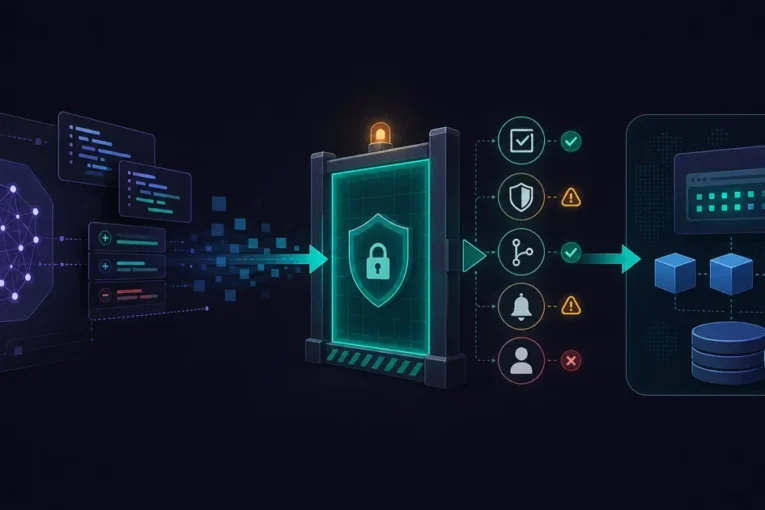
Production ready AI code needs a release gate
Leadership usually wants shorter delivery cycles, not unsafe software. Use that distinction.
Do not say the code feels risky. Say the authentication change has no policy test. Say the billing path has no rollback note. Say the new dependency has not been reviewed. Say the error path does not emit a useful log.
A release gate should fit on one page. It needs acceptance criteria, passing CI, tests for the changed behavior, approved dependencies, a named reviewer for sensitive paths, and a rollback plan. If the change touches permissions, payments, data deletion, or external integrations, require a second reviewer with context.
That gate makes the decision visible. Ship with known risk, reduce scope, or fund verification work.
Pushback works better when it names missing evidence instead of distrust.
Make review capacity visible
AI can increase output faster than review capacity. That is the trap.
Track 5 simple numbers for AI-assisted work: generated diff size, review time, rework count, tests added, and defects found before release. You do not need a dashboard. A short sprint note is enough:
Feature: invoice export
Generated diff: 1,420 lines
Human review: 3.5 hours
Tests added: 4
Release decision: split into 3 pull requests
Now the conversation is grounded. The team is not resisting AI. It is measuring whether the workflow is producing production-ready changes or moving cost into review.
In this article
Define ready before the model writes
The worst time to define ready is after the branch exists.
Before the prompt, write the acceptance criteria and the stop condition. If the model has to add an endpoint, name the request shape, response shape, validation rules, authorization rule, and failure behavior. If it has to refactor, name the callers that must keep working.
This protects both the team and the model. The agent can work against a specific target. The reviewer can compare the result against a written contract. Management can see that readiness was defined before the code existed, not invented afterward to block release.
Use a pilot instead of a debate
If leadership wants proof, run a narrow pilot for 2 weeks. Pick low-risk work: internal tooling, test generation, documentation updates, or small refactors behind existing tests.
Measure what changed. Did cycle time improve? Did review time increase? Did the team add more tests or fewer? Did generated code create new support work? Capture the answers in a short decision note.
A pilot gives the organization a working policy. It also keeps production systems protected while the team learns where AI helps and where it creates review debt.
| Pilot question | What to measure | What it proves |
|---|---|---|
| Did output increase? | Diff size and tasks completed | Whether AI changed volume |
| Did review stay possible? | Review time and rework count | Whether the workflow can absorb output |
| Did quality hold? | Defects found before release | Whether the gate catches risk early |
Frequently Asked Questions
Can AI generated code be used in production at all?
Yes, but only after the same evidence gate as human code. The team needs reviewed requirements, tests that cover the behavior, security checks where relevant, deployment notes, monitoring, and rollback ownership. AI generated code is not production ready because it looks clean. It is production ready when the risk is understood.
What does production ready mean in software development?
Production ready means the code can run in front of real users, fail in known ways, and be supported by the team after release. That includes tests, logs, deployment process, ownership, security review where needed, and a way back if the release creates damage.
How do you push back when management says AI code is ready?
Push back with missing evidence, not opinion. Name the tests that do not exist, the reviewer who has not signed off, the rollback path that is unclear, or the security check that still needs to run. That keeps the conversation on production risk instead of whether the team is supportive of AI.
What next?
If leadership wants AI speed but your team has no shared release gate, start by auditing the workflow before more code reaches production.