5 min read
The moment your team has CLAUDE.md, GEMINI.md, and AGENTS.md, you have a coordination problem.
AI tool sprawl is not only a procurement problem. In software teams, it creates instruction drift: Claude Code, Codex, Cursor, Copilot, Gemini, and other tools may receive different rules for the same repository. paqad-ai reduces that drift by generating thin provider entries from one shared project contract.
The problem is rule drift, not tool choice
Enterprises will use more than one AI tool. That is normal. Teams have different editors, security boundaries, contracts, and task types.
The risk starts when each tool carries its own rule file, written at a different time by a different person. One tool knows the test command. Another knows the design system. A third has the old architecture rule. The output then depends on the entry point, not the repository.
This is personal for teams because the requests sound practical. The Claude users ask for CLAUDE.md. The Gemini users ask for GEMINI.md. The Codex users ask for AGENTS.md. The company says yes three times and accidentally creates three versions of its engineering memory.
That number is useful because it names the real surface area. Enterprise AI consistency cannot depend on manually keeping 10 provider files aligned. The problem gets sharper when one team tests a tool for backend work, another uses a different tool for frontend work, and security approves a third tool for constrained tasks.
Provider-specific files should be thin
A provider entry file should open the door. It should not become the whole building.
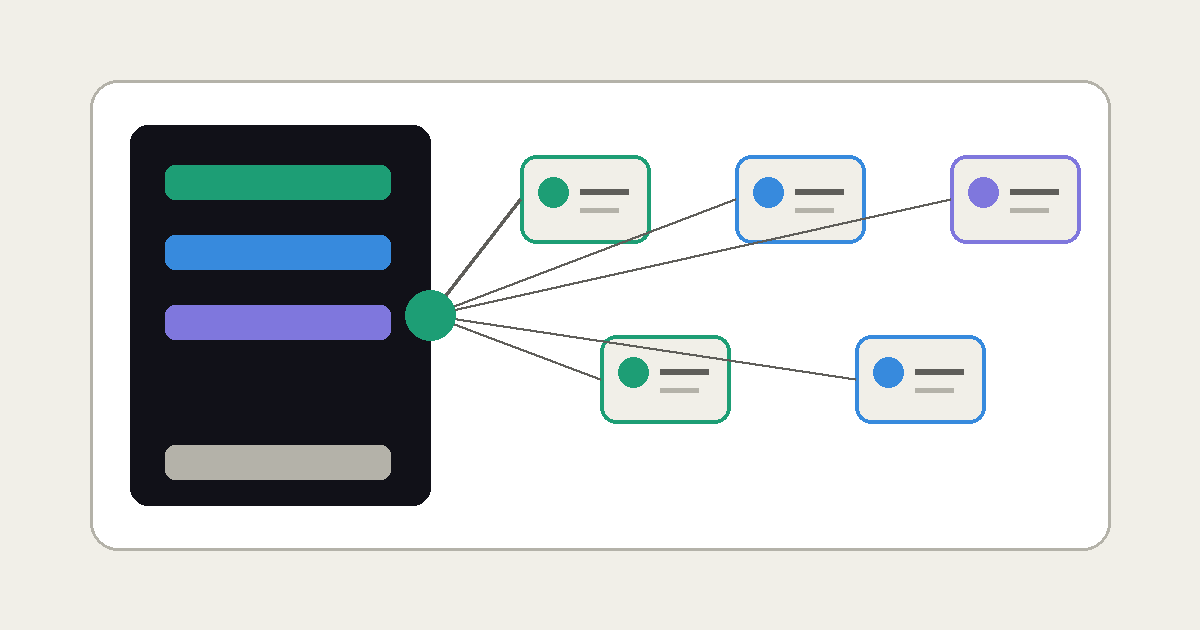
When AGENTS.md, CLAUDE.md, GEMINI.md, Cursor rules, Copilot instructions, and other files all contain duplicated project behavior, drift is guaranteed. The fix is to make those files thin and point them back to shared instruction bundles.
| Setup | What changes per tool | What stays shared |
|---|---|---|
| Manual files | Rules, stack notes, workflows | Nothing reliable |
| Copied template | Wording and stale sections | Some structure |
| Thin adapters | Provider-specific entry syntax | Project contract |
| paqad-ai onboarding | Generated entry files and MCP config | `.paqad/` and `docs/instructions/**` |
The provider can have its own format. The project rules should not fork. Forked rules create invisible differences that only appear during review.
What paqad-ai generates
paqad-ai’s onboarding flow can generate provider outputs for Claude Code, Codex CLI, Google Antigravity, Gemini CLI, Junie, Cursor, GitHub Copilot, Windsurf, Continue, and Aider.
The important detail is not the list. It is the model. Those outputs point back to shared framework-managed docs and state. That means a team can support different AI surfaces without asking every tool to maintain a private version of the codebase contract.
This is how a multi-tool environment can still behave like one project. It gives each agent a local doorway into the same shared project memory.
Tool sprawl also affects governance
OpenAI’s 2025 enterprise AI report describes deeper workflow integration through workplace use patterns such as Custom GPTs and Projects. That direction is predictable: AI becomes embedded in more places, not fewer.
For enterprise software teams, that makes governance harder unless the repository contract is shared. If approved tools read different rules, security and compliance teams cannot reason about AI-assisted work as one operating model.
The enterprise risk is not that teams use many tools. It is that every tool learns different rules.
paqad-ai helps by making the repository the common point. Provider files adapt to the tool. The rules, docs, workflows, and state remain project-owned.
The migration path is practical
You do not need to ban tools to reduce tool sprawl. Start by reducing instruction sprawl.
That gives teams a safer path than trying to standardize human preference first. It also gives procurement and security a clearer control surface: approve tools around a shared repository contract, then inspect whether each adapter still points to the same rules, docs, MCP configuration, and workflow expectations. The reviewer should not need to ask which AI surface produced the work.
What next?
If every AI tool has its own version of your project rules, the enterprise problem is not tool choice. It is contract drift. paqad-ai gives each provider a thin entry point into one shared framework layer.
Keep the tools flexible. Keep the rules shared.