5 min read
Enterprise AI workflows fail when prompt quality is treated as the control system.
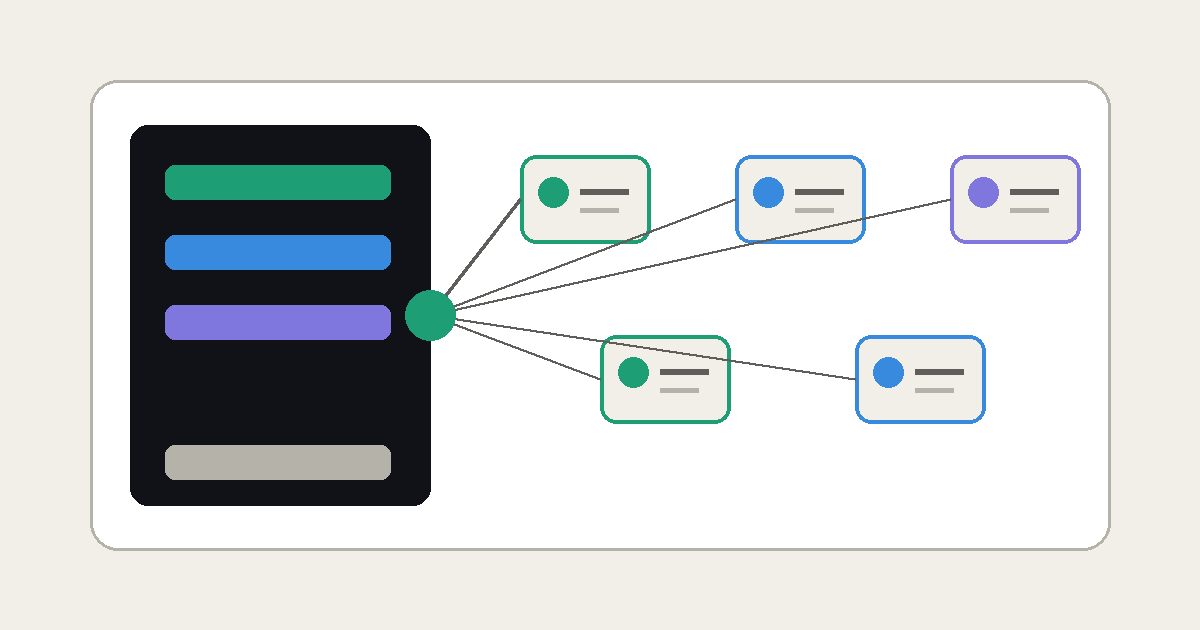
Enterprise AI workflows need routing, checks, review gates, evidence capture, and documentation updates. A prompt can shape one response, but it cannot manage delivery. paqad-ai treats AI-assisted work as a workflow problem by loading project rules, selecting workflow paths, running verification gates, and preserving state under .paqad/.
A prompt cannot carry the whole operating model
A prompt is useful inside a session. An enterprise workflow has to survive outside it.
This is where teams feel the pain. Someone writes a careful CLAUDE.md. A second group wants GEMINI.md. The Codex users need AGENTS.md. None of those files are wrong. The problem is that prompts become the workflow by accident.
McKinsey’s 2025 AI survey says the transition from pilots to scaled impact remains a work in progress at most organizations. One reason is visible in software teams: the AI tool can produce output, but the delivery system around that output stays informal.
That is the gap. A prompt can say, "write tests". A workflow has to decide which tests matter, when review happens, what blocks a change, where documentation is updated, and what evidence gets kept. Those are not wording problems. They are operating rules. The moment AI output affects production code, the workflow has to describe the handoff between product, engineering, security, and review.
Workflow structure beats prompt polish
Prompt libraries usually optimize the front of the task. They help the agent understand what the user wants. Enterprise delivery needs the back of the task too: verification, review, audit, and handoff.
The DORA 2025 report frames AI as a systems problem, not only a tools problem. That maps directly to AI-assisted development. A team with clear test practices, ownership, and review discipline gets more from AI than a team that adds prompts to a weak delivery process.
| Layer | Prompt library | Workflow framework |
|---|---|---|
| Scope | One response | Full task path |
| Control | Instruction wording | Gates and stages |
| Evidence | Chat content | Files, reports, logs |
| Handoff | Manual summary | Structured state |
| Reuse | Copy and paste | Repeatable execution |
Prompt quality still matters. It is just not the boundary of enterprise control.
What paqad-ai adds around the prompt
paqad-ai’s README shows custom workflow support with conditional steps, parallel execution, failure handling, and resumable runs. That matters because enterprise AI work needs a path, not only a better opening message.
A feature workflow can route through scope checks, spec diffs, implementation, test writing, adversarial review, and documentation sync. The point is not ceremony. The point is that every agent sees the same process, and every reviewer can understand which stage produced which artifact.
That is a different product shape from a prompt document.
Workflow also limits tool drift
Enterprises rarely standardize on one AI surface forever. Developers use Codex, Claude Code, Cursor, Copilot, Gemini CLI, or whatever the team has approved for a given task. If each surface carries a different prompt library, the workflow fragments.
paqad-ai handles this by generating thin provider files that point back to shared instruction bundles. The provider can change. The project contract should not.
This is where enterprise value appears. Consistency beats individual prompt craft.
The workflow is the governance surface
NIST’s AI RMF asks organizations to govern, map, measure, and manage AI risks. For AI-assisted software delivery, the workflow is where those verbs become concrete.
Govern means deciding who can approve decisions. Map means knowing which files, modules, and rules are affected. Measure means checking tests, docs, compliance, and security evidence. Manage means blocking or escalating when the change violates the contract.
A prompt asks for good behavior. A workflow proves what happened.
That proof is what enterprise teams need when AI output moves from experiment to delivery.
What next?
If your AI adoption plan is mostly prompt libraries, the next step is to turn the best prompts into repeatable workflow stages. paqad-ai gives teams the routing, checks, and repo state needed to make that shift.
Do not scale prompts before the workflow exists.